ako ^_^

Aking larawan
about me Hi!! mga kabloggers ako si marinell mhaan s. templo pero puede nyo rin akong tawaging "mhaan" from I-sapphire RSHS III bago lumabas please follow tnx a lot... =D

Biyernes, Hunyo 24, 2011

local intrepreneurs


Lucio Tan - founder of Asia Brewery
                         
Henry Sy- founder of SM
          
  
    erics Pharmacy. Benjamin Liuson is growing The Generics Pharmacy (TGP) at a phenomenal rate. The Generics Pharmacy has expanded its network from a single main outlet into 840 branches—all in a span of three years. In contrast, it’s biggest competitor took 65 years to establish its 700 branches.  


Manny Pangilinan - founder of PLDT Ph 


Lunes, Hunyo 20, 2011

walang pasok

haha sayang walng pasok ngayon

ecxitrd ako ei antagal ualang pasok pero okay lng
haha fb muna ^_^ ...

Sabado, Hunyo 18, 2011

thank you Rizal..

‎>ayan ツ

we should all thank RIZAL.......

-
-
-
-
-
-

walang pasok sa MONDAY!!!! WoooooH! XD-


Miyerkules, Hunyo 15, 2011

assignment no. 5 (Can You Apply It Now ? )

Entrepreneurial Characteristics of Carla :
                        - Creativity
                        - Courage
                        - Strong Desire to Achieve
                        - Self - Confidence
                        - Self - Control
                        - Desire for Immediate Feedback
                        - High Energy Level
                        - Desire for Responsibility
                        - Decision Making Skills
                        - Well Defined Values

Martes, Hunyo 14, 2011

assignment no. 4 ( Can You Understand ? )

1.    Evaluate the different entrepreneurial characteristics under PECs. How does applying similar characteristics helps us succeed in other areas of life ? Explain your answer by giving examples.


  •  Vigilance for Opportunities
  • Commitment to work contract
  • Persistence 
  • Willing to Take Risks 
  • Demand for Efficiency and Quality
  • Goal Setting
  • Information Seeking
  • Systematic Planning and Monitoring
  • Persuasion and Networking
  • Self Confidence
       - A successful entrepreneur is always on the go. These characteristics can help he/she to be a successful entrepreneur.


2.   Explain how having the Personal Entrepreneurial Competencies can help you become a successful entrepreneur.
       - PECs can help an entrepreneur to become successful by guiding him/her through this competencies on the important detail of the business and establish various characteristics of a good entrepreneur.

at

Biyernes, Hunyo 10, 2011

assignment no. 3

Personal Entrepreneurial Competencies (PECs) 

For reference, I'm posting here the ten Personal Entrepreneurial Competencies (PECs) which seems to be used in the Business Technology/Entrepreneurship programs of the Technology and Livelihood Education (T.L.E.) subject.

The original research by McClelland and McBer identified 14 PECs; the EMPRETEC [a UN program for small businesses; from the Spanish words emprendedores (entrepreneurs) and tecnología (technology)] clustered these into just 10:

Achievement Cluster
I. Opportunity Seeking and Initiative
* Does things before asked or forced to by events
* Acts to extend the business into new areas, products or services
* Seizes unusual opportunities to start a new business, obtain financing, equipment, land work space or assistance

II. Risk Taking
* Deliberately calculates risks and evaluates alternatives
* Takes action to reduce risks or control outcomes
* Places self in situations involving a challenge or moderate risk

III. Demand for Efficiency and Quality
* Finds ways to do things better, faster, or cheaper
* Acts to do things that meet or exceed standards of excellence
* Develops or uses procedures to ensure work is completed on time or that work meets agreed upon standards of quality

IV. Persistence
* Takes action in the face of a significant obstacle
* Takes repeated actions or switches to an alternative strategy to meet a challenge or overcome an obstacle
* Takes personal responsibility for the performance necessary to achieve goals and objectives

V. Commitment to the Work Contract
* Makes a personal sacrifice or expends extraordinary effort to complete a job
* Pitches in with workers or in their place to get a job done
* Strives to keep customers satisfied and places long term good will over short term gain

Planning Cluster
VI. Information Seeking
* Personally seeks information from clients, suppliers or competitors
* Does personal research on how to provide a product or service
* Consults experts for business or technical advice

VII. Goal setting
* Sets goals and objectives that are personally meaningful and challenging
* Articulates clear and specific long range goals
* Sets measurable short term objectives

VIII. Systematic Planning and Monitoring
* Plans by breaking large tasks down into time-constrained sub-tasks
* Revises plans in light of feedback on performance or changing circumstances
* Keeps financial records and uses them to make business decisions

Power Cluster
IX. Persuasion and Networking
* Uses deliberate strategies to influence or persuade others
* Uses key people as agents to accomplish own objectives
* Acts to develop and maintain business contracts

X. Independence and self-confidence
* Seeks autonomy from the rules or control of others
* Sticks with own judgement in the face of opposition or early lack of success
* Expresses confidence in own ability to complete a difficult task or meet a challenge

The following studies might be useful for those who are studying these PECs:
The Personal Entrepreneurial Competencies of BS Entrepreneurship Students of the Cordillera Administrative Region and
Practicing Entrepreneurs in the Cities of Baguio, Dagupan, and San Fernando, La Union: A Comparison

An analysis of the personal entrepreneurial competencies of students: implications to
curriculum designing of entrepreneurship 


assignment no. 2


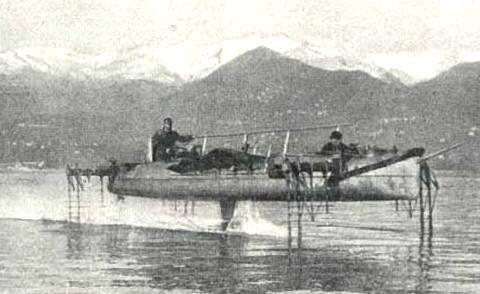
Hydrofoil boat 1910 Forlanini Idroplano - Lake Maggiore


The hydrofoil


The March 1906 Scientific American article by American hydrofoil pioneer William E. Meacham explained the basic principle of hydrofoils. Bell considered the invention of the hydroplane as a very significant achievement. Based on information gained from that article he began to sketch concepts of what is now called a hydrofoil boat.

Bell and Casey Baldwin began hydrofoil experimentation in the summer of 1908 as a possible aid to airplane takeoff from water. Baldwin studied the work of the Italian inventor Enrico Forlanini and began testing models. This led him and Bell to the development of practical hydrofoil watercraft.

During his world tour of 1910–1911 Bell and Baldwin met with Forlanini in Italy. They had rides in the Forlanini hydrofoil boat over Lake Maggiore. Baldwin described it as being as smooth as flying. On returning to Baddeck a number of designs were tried culminating in the HD-4, using Renault engines. A top speed of 54 miles per hour was achieved, with rapid acceleration, good stability and steering, and the ability to take waves without difficulty. Bell's report to the navy permitted him to obtain two 350 horsepower (260 kW) engines in July 1919. On September 9, 1919 the HD-4 set a world's marine speed record of 70.86 miles per hour. This record stood for ten years.

Bell was a supporter of aerospace engineering research through the Aerial Experiment Association, officially formed at Baddeck, Nova Scotia in October 1907 at the suggestion of Mrs. Mabel Bell and with her financial support. It was headed by the inventor himself. The founding members were four young men, American Glenn H. Curtiss, a motorcycle manufacturer who would later be awarded the Scientific American Trophy for the first official one-kilometre flight in the Western hemisphere and later be world-renowned as an airplane manufacturer; Frederick W. "Casey" Baldwin, the first Canadian and first British subject to pilot a public flight in Hammondsport, New York; J.A.D. McCurdy; and Lieutenant Thomas Selfridge, an official observer from the U.S. government. One of the project's inventions, the aileron, is a standard component of aircraft today. (The aileron was also invented independently by Robert Esnault-Pelterie.)


Eugenics


Along with many very prominent thinkers and scientists of the time, Bell was connected with the eugenics movement in the United States. From 1912 until 1918 he was the chairman of the board of scientific advisors to the Eugenics Record Office associated with Cold Spring Harbor Laboratory in New York, and regularly attended meetings. In 1921 he was the honorary president of the Second International Congress of Eugenics held under the auspices of the American Museum of Natural History in New York. Organizations such as these advocated passing laws (with success in some states) that established the compulsory sterilization of people deemed to be, as Bell called them, a "defective variety of the human race." By the late 1930s about half the states in the US had eugenics laws, the California laws being used as a model for eugenics laws in Nazi Germany.

Much of his thoughts about people he considered defective centered on the deaf because of his long contact with them in relation to his work in deaf education. In addition to advocating sterilization of the deaf, Bell wished to prohibit deaf teachers from being allowed to teach in schools for the deaf, he worked to outlaw the marriage of deaf individuals to one another, and he was an ardent supporter of oralism over manualism. His avowed goal was to eradicate the language and culture of the deaf so as to force them to integrate into the hearing culture for their own long-term benefit and for the benefit of society at large. Although this attitude is widely seen as paternalistic and arrogant today, it was mainstream in that era.

Although he supported what many would consider harsh and inhumane policies today, he was not unkind to deaf individuals who proved his theories of oralism. He was a personal and longtime friend of Helen Keller, and his wife Mabel was deaf, though none of their children were. Bell was well known as a kindly father and loving family man who took great pleasure in playing with his many grandchildren.

His son-in-law was National Geographic Editor Gilbert Hovey Grosvenor.


Tribute


In the early 1970s, UK Rock Group The Sweet recorded a tribute to Bell and the telephone, suitably titled "Alexander Graham Bell". The song gives a fictional account of the invention, in which Bell devises the telephone so he can talk to his girlfriend who lives on the other side of the United States. The song reached the top 40 in the UK and went on to sell over one million recordings world-wide.

Another musical tribute to Bell was written by the British songwriter and guitarist Richard Thompson. The chorus of Thompson's song reminds the listener that "of course there was the telephone, he'd be famous for that alone, but there's fifty other things as well from Alexander Graham Bell". The song mentions Bell's work with discs rather than cylinders, the hydrofoil, Bell's work with the deaf, his invention of the respirator and several other of Bell's achievements.


source:http://www.solarnavigator.net/inventors/alexander_graham_bell.htm